Categories
News

News from Tashkent

November 2025

What Happened so far This Year, update by Magdalena Brannstrom

TRAINING:

In January, we had a new ICDP course training new facilitators.

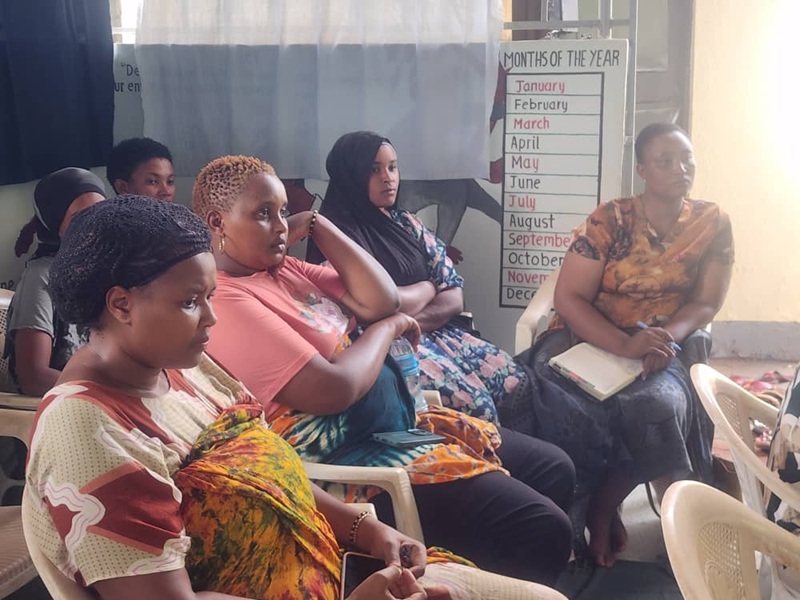
In April, the new facilitators started running their own ICDP courses for caregivers. Two groups of caregivers attended the ICDP course in two different “Happy Start” preschools. And two groups of preschool caregivers who became facilitators, went on to implement the ICDP programme with parents. This was a great group of facilitators, who enjoyed the training process and we also had fun together. The results are very good, as I was able to observe facilitators and see that they are doing excellent work in delivering the ICDP programme to parents and preschool staff.

In June, we conducted a ceremony to give out certificates to new ICDP Facilitators. Six people received their ICDP Facilitator Diploma.

TELEGRAM CHANNELS: We have started two new ICDP Telegram channels for those who want to have more information about the programme. Parents, teachers or anyone who has gone through the programme will receive updates on these channels.

MATERIALS: We have finalized the material translated into Uzbek. We now have available in Uzbek language, both the booklet “I Am a Person”, and the “ICDP Guide for Facilitators”.

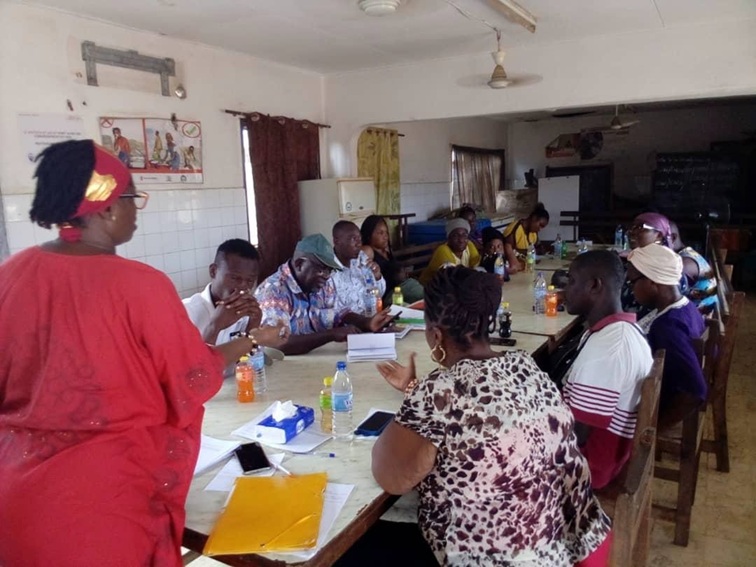
In September we started an ICDP programme for teachers in the government school called “School 29”, where the training is being held on Saturdays. Three facilitators are conducting this ICDP course: Ragnar Moskvild, Tabea Wick and Magdalena Brannstrom are conducting the ICDP course for some of the school teachers.  To date, we have had about 60 teachers participating in the training. Not everyone attends at the same time, about 25 to 30 teachers participate in sessions. The training is going very well and the teachers have been very interested and engaged. And we will end the course in December.

Here is some feedback from the ICDP course with preschool staff:

From a trainee facilitator doing her first ICDP course: -I think this course had a positive impact on the participants because they were of different ages, cultures, and backgrounds in working with children. Those who have already taken this course gained a new perspective on familiar principles.

Feedback from another trainee facilitator doing her first ICDP course in a kindergarten with her colleagues. This is her feedback after observing her participants’ interaction with the children during and after the ICDP course. She observed how her colleagues had changed: – I was able to achieve the goal of my work. When I saw how the participants interacted with the children, that is when I understood that their attitude towards the children had changed. They began communicating with them more, and I could see them starting to touch children reassuringly.

Comment from another facilitator, who said: – At one of the meetings, we discussed how children need to be shown love and care, and we talked about the meaningful dialogue. Immediately after this meeting, I saw how the participants began to connect with children more, to connect with them on their level. And then, later after the ICDP course has been completed I noticed that many of the participants have begun communicating with their children differently and have begun to achieve mutual agreement with children without using strict or harsh ways, but with love and patience.

Feedback from parents who attended ICDP caregiver course:

A mother said: – The relationship and understanding between me and the children has improved. It is easier for me to give information. The children are behaving more stably now, with fewer hysterical reactions. The relationship and understanding within the family became better. 

Another mother explained: – I became calmer. I learned how to set time for my children and make it predictable for them; How to spend time intentionally and communicate plans ahead (e.g., telling them what will happen tomorrow).

Feedback from one of the teachers

After the session about turning negative aspects into positive aspects in a child or a student, one of the facilitators talked about how you need to dig for gold in each student. At the next ICDP meeting, one of the teachers shared about her home task and showed a picture of students lining up and presenting something. She explained that one of the boys in the picture was usually not very engaged in class, but in this picture, the boy was standing with other students, presenting. The teacher sent this picture to the boy’s father and told him: “Look at your son. Look how great he is doing the presentation. How engaged he is in the class.” This had a positive effect on the father. The next day, the boy who before was not engaged and maybe not listening attentively, was now very engaged in class. She thought probably the father had said something positive to the boy after seeing the picture.

Categories
News

Implementing ICDP in practice in Denmark

Update by Majbritt Bay, October 2025.

In the Institute for Relational Psychology (Institut for Relationspsykologi), we have conducted ICDP courses in both daycare centers and schools with all or a large part of the staff group. There is a great strength in this, as it provides a common language and a common starting point for the relational and resource-oriented work in practice and many good discussions during the course.

This is a story from a teacher at a Danish school who has participated in the ICDP course together with her colleagues. She describes the effect that working relationally based on the interaction themes has had for her.

I was a little skeptical about what ICDP would change in my pedagogical practice. I wondered if it would be another “fancy model” that would quietly be shelved with many other initiatives. I have been very positively surprised by how effective ICDP has been for me and how quickly I can see results from the changes I make. I quickly experienced gains in my relationships with all the children in my class by applying the 8 interaction themes. Small adjustments have a big impact.

The teacher has also expressed that it has been of great importance to her that she has accompanied her colleagues in the process.

The above is an example of how ICDP has an effect in practice. The processes we have had with staff groups have given rise to a dialogue about how, as an organization or municipality, you can build good structures and an organization in terms of management that ensures the continued implementation of the ICDP principles. We therefore see an increased interest in supporting this process in practice.

Categories
News

New materials published in Denmark

Update by Anne Linder, Dansk Center for ICDP

Empathy at children’s level

The Danish Centre for ICDP (Dansk Center for ICDP) has published new teaching material, to be used when applying ICDP with children in kindergartens.

These new materials provide help for professionals to support the development of children’s social skills through teaching, conversations and guidance. The “suitcase with materials” can be used as a concrete toolbox for teaching and individual counselling of children who need knowledge about relationships and interaction. The material can be a valuable resource for introducing the eight themes for good interaction (ICDP) at children’s level.

  1. How do we use our emotions – so that our hearts become warmer?
  2. How do we play and learn together – so that our brains become smart?
  3. How do we help decide – so that we create good communities?

New book

Resilience researcher Ida Skytte Jakobsen, PhD and psychologist Anne Linder have together published the book “The Resilience Guide” at the publishing house Dafolo. The book is based on the basic idea that good relationships – created through the ICDP create the necessary hope and resilience in vulnerable children and families.

The book is aimed at professionals – teachers, educators, social workers and psychologists in both general and special education contexts – and it gives concrete instructions on how to work together to strengthen hope, relations and resilience of children and young people when life becomes a challenge.

Categories
News

First ICDP facilitators trained in Germany

Update by Rita Crecelius

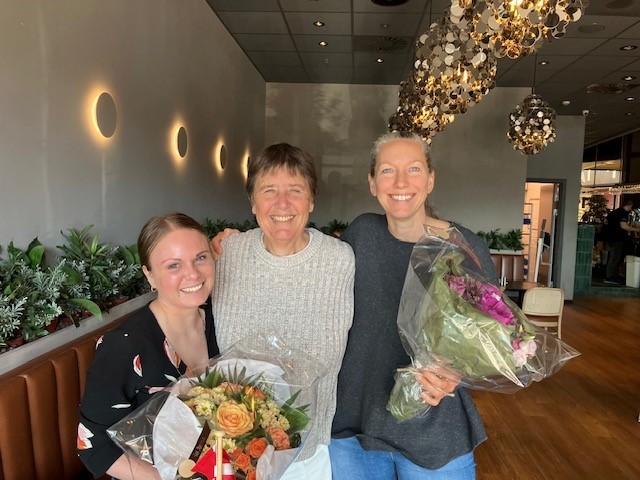
The first group of ICDP facilitators received their certificates on Sunday, 24th of August, 2025. They came from different organizations involved in the care of children and adults, and all participants carried out their field work with great enthusiasm and commitment.

During the last workshop, every single facilitator’s presentation revealed a precious journey of empowerment and sensitization through the ICDP process. The facilitators felt touched by the many golden moments they had experienced while applying the eight ICDP guidelines for good interaction within a caregiving context, whether with children or with adults. One facilitator implemented the ICDP programme with a group of eight parents (seven mothers and one father). He wrote the following summary:

All participating parents did primarily reflect on their own attitudes and self-perception. (…) Parents described truly noticeable shifts in the quality of their relationship with their children. Several reported touching feedback from the children, who noticed changes in their parents’ behavior toward them that made them feel more at ease and emotionally supported. (…) A sense of trust emerged among the participants and in their relationship with me as the facilitator. One participant described how, in the moment of interaction (with her child), she sensed the presence of the entire group in her mind, helping her mastering the situation. (…) The atmosphere of the parent meetings was warm and familiar, and they became a routine for every participant who gladly integrated them into their daily routines even though it seemed so busy. It felt like a breath of fresh air from the busy day, shared in a circle of trust.

J. Blume, Berlin.

The implementation of ICDP in Germany is being led by psychologist Rita Crecelius. She is supported by the Lower Saxony Institute for Early Childhood Education and Development (nifbe) and AEWB, the Agency for Adult and Continuing Education in Lower Saxony. The next facilitator level training will start in February 2026.

Categories
News

Snapshot from Finland

by Petra Zilliacus, October 2025.

(Photo: The September sun shines on ICDP facilitators as they explore Empathy in action.)

As the autumn envelops us in dark evenings, ICDP Finland has many shining memories to look back on from this year.

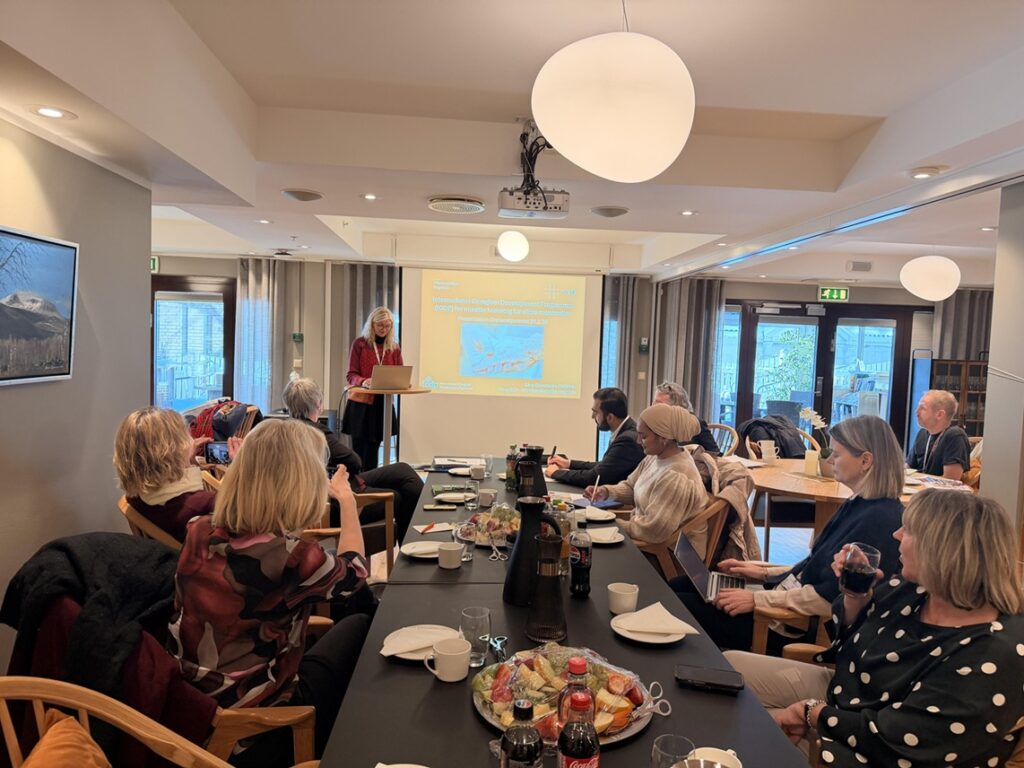
We would especially like to highlight the international training, where twenty-seven youth workers and teachers from seventeen different European countries participated in a three-day ICDP course in Pargas. The event was organized by Pargas City Youth Department in a successful collaboration with ICDP Finland and the EU SALTO Erasmus+ programme. 

At the end of September, 21 ICDP facilitators met in Helsinki to dive into the subject of Empathy in action. We learned about the different meanings and nuances of the words empathy, sympathy, compassion, and empathetic identification. To the delight of the participants, we also got to practice empathy in workshops and role play.

Our third highlight of the year is currently in the making. We are grateful to our extended ICDP-family in Sweden, who have produced an ICDP-booklet for expectant parents and given us permission to translate it into Finnish. This will soon be ready and we are eagerly awaiting to be able to launch the booklet for this important target group.

Categories
News

ICDP national scale implementation in El Salvador

During 2025, the National Council for Early Childhood, Children, and Adolescents (CONAPINA), continued to implement the ICDP programme “También Soy Persona” (“I am a person too”) in all three modalities of the programme:

1) ICDP for early childhood/for parents of young children,

2) ICDP in the modality adapted for parents of adolescents, and

3) ICDP for adolescents, who receive training from their peers trained as ICDP facilitators.

The implementation of the three modalities is taking place at national level.

Within the framework of the National Play Strategy, CONAPINA incorporated an additional session as part of the roll out of “Tambien Soy Persona” – it is a session on the importance of play at each stage of life. The play session has been added to each of the three modalities of the programme mentioned above. 

During 2025, for the first time in El Salvador, the ICDP programme “Tambien Soy Persona” was also used with mothers deprived of liberty,  and with families of children who are under the care of the National Protection Board.

CONAPINA’s observation of the effect of the programme convinced them of its positive impact on families, children, and adolescents.

Categories
News

ICDP in Bhutan

A Norwegian NGO called “Progreso Foundation” initiated the ICDP developments in Bhutan. This was possible thanks to their contacts in the country, who were seeking for programmes that could enhance the understanding of child development and provide psychosocial support for children in Bhutan.

Later on, an agreement was signed between the Department of Public Health and Allied Health Sciences, the Faculty of Nursing and Public Health (FNPH) and ICDP Norway, at the beginning of 2024. It was decided that an ICDP pilot project should be implemented as a first step in evaluating whether the ICDP programme could be relevant to the country. The pilot was funded by Progreso Foundation and HimalPartners in Norway.

The first ICDP workshop was held in Paro, from 26 -28, November, 2024. There were 23 participants connected to the Faculty of Nursing and Public Health (FNPH), National Medical Services (NMS), and Early Childhood Care and Development (ECCD). The primary objective was to start the process of ICDP training that would lead to the certification of participants as ICDP facilitators. International trainers, Ingeborg Egebjerg and May Aanundsen conducted the training. The workshop served as a platform for participants to explore key aspects of child development within the local context, and through a series of interactive activities, presentations, and group discussions, the training aimed to enhance the competencies of child care providers and promote more meaningful and empathetic engagement with children.

The second ICDP facilitator level training took place in Wangdue Phodrang, from 18-20, March, 2025. Due to unavoidable circumstances, two participants from the ECCD group were unable to attend. Consequently, 21 participants enrolled in the training and eventually completed the training. Following the second ICDP training, nine groups were formed, each conducting eight professional caregiver training sessions.

The certification workshop took place in June 2025. The training was very successful as can be seen from the comments by trained caregivers and facilitators.

The Faculty of Nursing and Public Health (FNPH) is in process of establishing partnership with ICDP and they will be responsible for ICDP developments in Bhutan.

Categories
News

Twenty years of ICDP in Boyaca, Colombia

Letter to ICDP from a trainer

Dear ICDP,

I would like to tell you about several things that have been happening in our department regarding the program.

In our department, there has been a shift in the implementation of mental health programs and strategies within the Boyacá Health Secretariat. These changes also affect the ICDP program “I Am a Person Too”.  This means that from now on, the Secretariat will be implementing the ICDP program with groups of psychologists who have previously trained in the program. This strategy will continue to sustain the program in our department long term.

On another note, I would like to share with you that we continue with the commitment of celebrating the 20th anniversary of ICDP in Boyacá. In this context, I am showcasing the community and health education strategy based on good treatment, emotional connection, empathy, improving the family environment, and strengthening public policy for early childhood and adolescence.

ICDP is still going strong here twenty years after Nicoletta Armstrong introduced us to ICDP: Thank you Nicoletta for your support and trust over these twenty years of growth, not only as a department, but in my case, as a person and a human being… my initial vision of parenting and its importance in human lives has changed radically. I hope to continue counting on your support in my new activities, which will undoubtedly continue to be linked to ICDP.

Here I also share with you some images of the work we have done in recent months in 2025, in Paipa, Pisba, Floresta and Corrales. This work has been multi-level: decision makers, formal and informal leaders in the communities, families and adolescents.

I will write to the Governor of Boyacá thanking him for his support over these twenty years.

Thank you again,

Luis Fernando Lopez, ICDP trainer and coordinator of ICDP in Boyacá

Categories
News

ICDP in rural Panama

Update by Antonio Mendosa, September 2025:

ICDP continues to be applied in the poorest rural communities of Panamá.

The ICDP approach to rural communities in the Renacimiento District, Chiriqui Province, has been integrated and adapted to the diverse realities of the population, comprised of peasant agricultural families, indigenous Ngäbe families, and primary and secondary school teachers.

Our project with the Ngabe ethnic group has been reaching out to many families. We are focused on creating optimal development in children and adolescents. And for this purpose, we hold regular workshops and training sessions with parents, children, adolescents and school educators.

Throughout these workshops we have been developing the ICDP principles and promoting good treatment in families and their community.

We are noticing significant results of our work, and achieving them is requiring a joint effort from the entire population involved – we see improvements in communication, application of empathy and the population has been developing a new set of parenting skills. The results have included greater parental involvement with their children, improved attachment, and recognition of children’s rights by both parents and teachers.

Suicide rates among adolescents and young people have decreased due to ongoing monitoring through training workshops and camps. See more photos

Categories
News

Update on the national scale up in the Philippines

Since the start of the national scale up in 2022, the certified ICDP facilitators have been creating the multiplier effect on ICDP, which is now called MaPangBata, targetting families involved in the 4Ps government project.

To date there are 6070 facilitators who implemented the ICDP programme with 46 327 parents.

As a way to provide for sustainability and continuity of the ICDP/MaPangBata implementation it was agreed to establish an “in house” of ICDP trainers. 

With this aim in mind, 36 staff members of 4Ps (F-28; M-8) were trained as ICDP trainers starting with a workshop in February 17-21, 2025.  As part of their practice and in compliance to the ICDP certification process and requirements, they have started the MaPangBata multiplier effect through their “on the job training” activity.

The 36 candidate ICDP trainers have been training social case managers and other staff on MaPangBata in their respective regions. This approach will continue until all 4Ps staff are trained as facilitators. In effect, they will create layers of multiplier effect until all the three million 4Ps families are reached.

Read the full update from ICDP Philippines.